When Priorities Shift: Tips to Keep Your Team Aligned
Jan 25, 2026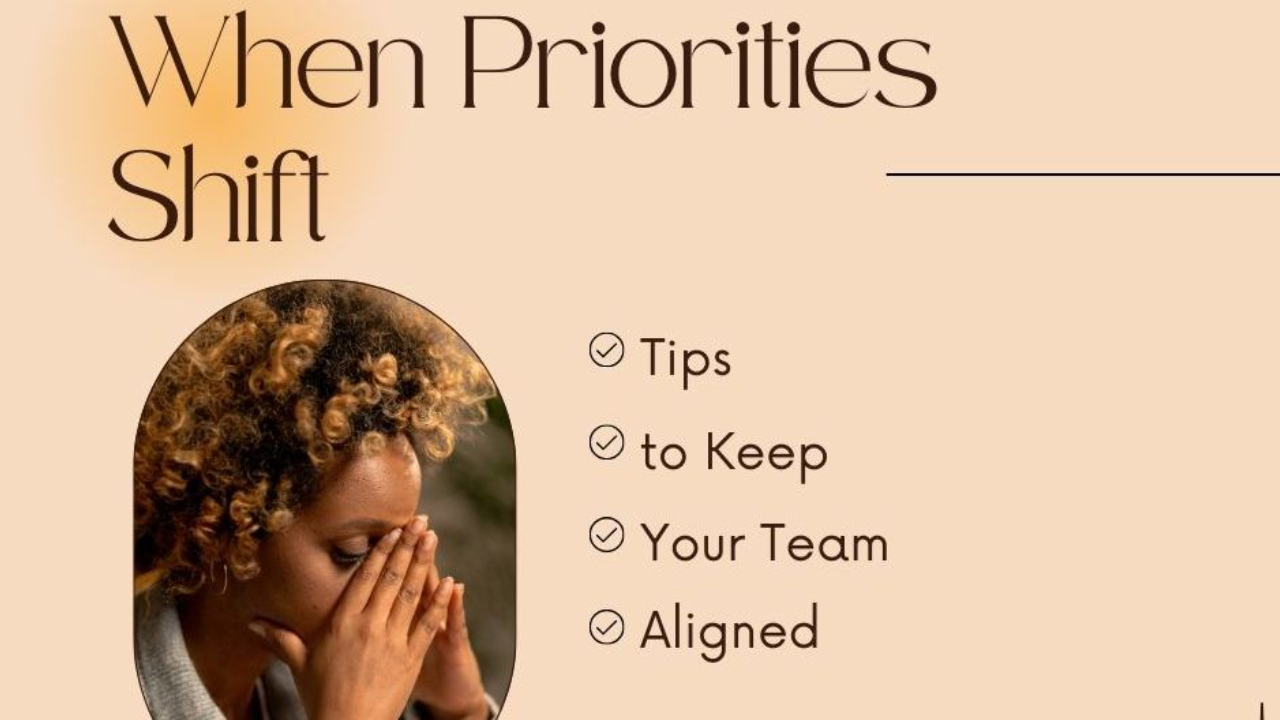
If you’re leading right now, let’s name the obvious:
Priorities don’t just shift occasionally they shift constantly.
New information. New pressure. New crisis. New directive. It feels like we’re always saying, “Lions, and Tigers and Bears, Oh My.”
While adaptability is praised as a leadership superpower, here’s the quieter truth many leaders are carrying:
The pace of change is exhausting people INCLUDING the LEADER. I love leading but the pressure of doing that has a cumulative effect and I have to be very intentional about how I relieve my stress. Exercise, laughter and creative things like writing this blog help me. What are you doing to relieve stress?
We all know change itself isn’t bad. It’s necessary but how we manage shifting priorities often drains clarity, trust, and energy.
So, the question isn’t how do we stop priorities from changing?
It’s how do we maintain alignment when they do without wearing everyone down including ourselves?
First, Let’s Normalize This: Shifting Priorities Are Not a Leadership Failure
Many leaders feel a quiet guilt when they have to pivot.
“I just told them this was the focus.”
“They’re going to think I don’t know what I’m doing.”
“They’re already tired.”
Here’s the reframe:
Changing priorities isn’t the problem. Changing them without context is.
John Kotter, a leading expert on change, reminds us:
“Change is not an event, it's a process.”
Your job isn’t to prevent change.
It’s to help people make sense of it.
Why Teams Get Exhausted by Change (Hint: It’s Not the Work)
Teams don’t burn out because priorities shift.
They burn out because:
- They don’t know why things changed
- They don’t know what still matters
- They’re afraid everything is now urgent
When everything feels important, people default to overworking or shutting down.
Alignment isn’t about speed.
It’s about orientation.
What Stays, What Shifts, What Stops
When priorities change, most leaders announce what’s new.
Aligned leaders do something more powerful: they provide anchors.
Use This 3-Part Reset Every Time Priorities Shift
- What Stays the Same
- Core purpose
- Values
- Non-negotiables
This creates psychological safety. - What’s Shifting
- Be specific and honest
- Name the trigger (new data, external pressure, learning)
This builds trust. - What We’re Stopping or Pausing
- This is the most skipped step and the most important.
Stopping is what prevents burnout.
Michael Porter’s insight applies here:
“The essence of strategy is choosing what not to do.”
If nothing is being released, alignment won’t hold.
One Question That Preserves Energy and Alignment
Instead of asking teams to “do more,” ask this:
“What needs to be let go so this new priority can succeed?”
This question:
- Signals respect for capacity
- Invites shared ownership
- Prevents silent resentment
It also models that well-being and performance are not competing goals.
Leaders Get Exhausted Too Here’s Why
Let’s talk about you for a minute.
We often carry the emotional weight of change privately:
- Absorbing pushback
- Managing uncertainty
- Translating pressure downward
- Bad attitudes
That last one can suck the life out of me some days. I have zero tolerance for bad attitudes. If someone isn’t happy in our organization, I encourage them to go find their joy elsewhere. Life is too short to be miserable and what we do here is too important to let attitudes detract from our impact.
That’s why maintaining alignment can feel draining. It’s invisible labor.
Here’s the shift that helps:
You don’t need to carry clarity alone. You need to create it together.
Alignment strengthens when leaders:
- Say “Here’s what I know and what I don’t”
- Invite dialogue instead of defending decisions
- Repeat priorities without apology
As Brené Brown says:
“Clear is kind. Unclear is unkind.”
Clarity reduces emotional load for everyone.
A Weekly Alignment Habit That Prevents Burnout
You don’t need a new system. You need a rhythm.
Try ending key meetings with one question:
“Based on everything we discussed, what should we each focus on next week?”
If answers differ wildly, alignment needs repair.
If answers are clear, energy returns.
Alignment isn’t built once it’s maintained in moments.
Priorities will keep shifting. That’s leadership in the real world.
Exhaustion isn’t inevitable.
When leaders:
- Provide context
- Release work intentionally
- Protect clarity over urgency
Teams don’t just keep up, they stay grounded and that’s one of the most critical components of success. Grounded teams can handle change without losing themselves.
Next in this series, we’ll explore how leaders can spot early signs of misalignment before performance or well-being suffers and what to do in real time.
Until then, remember this:
Stability doesn’t come from static plans.
It comes from consistent clarity.
That’s how alignment survives change and so do you and your team.